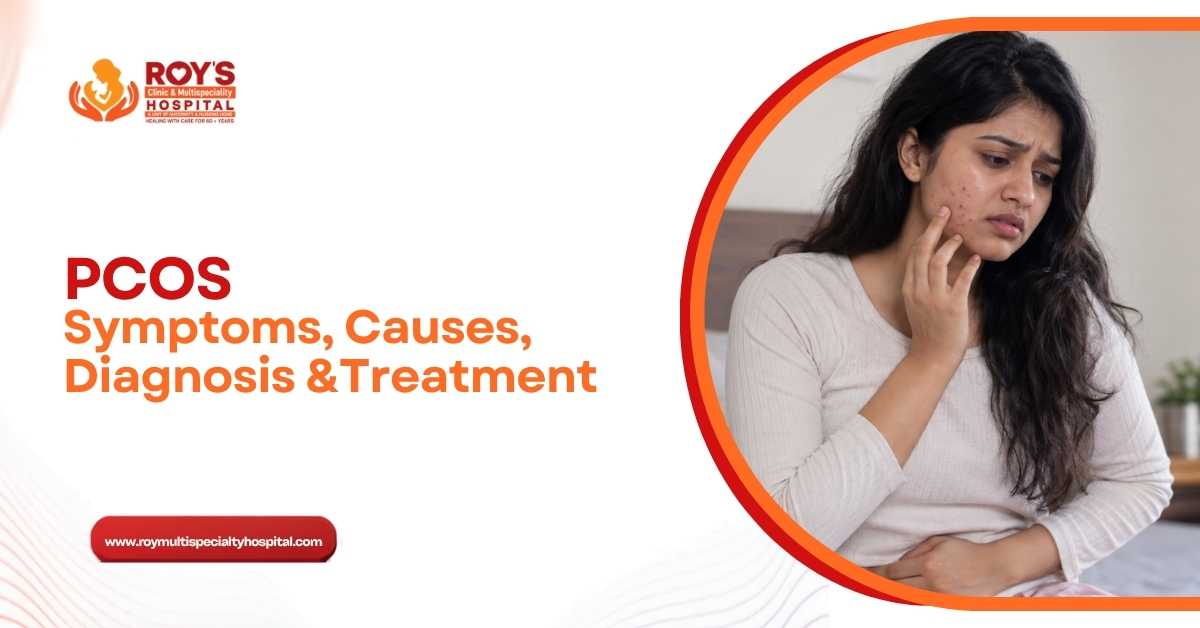

PCOS, now also called PMOS (Polyendocrine Metabolic Ovarian Syndrome), can affect periods, ovulation, hormones, skin, hair, metabolism, and fertility.
The signs are not the same for everyone. Having irregular periods does not mean you have PCOS. If you have several symptoms, a gynecologist doctor in Siliguri can check what may be causing them.
Here, you’ll find information about PCOS symptoms, causes, diagnosis, treatment, fertility, and when to see a doctor.
Overview of PCOS
PCOS (polycystic ovary syndrome) is a hormonal condition that can also affect metabolism during the reproductive years. It may affect:
● Periods and ovulation: Periods may become irregular, and ovulation may not happen regularly.
● Androgens: Higher androgen levels can cause acne or extra facial and body hair.
● Metabolism: Insulin resistance, blood sugar, or cholesterol changes may occur.
● Skin and hair: Some people notice acne, excess hair growth, or scalp hair thinning.
● Mental health: Anxiety, depression, and sleep problems can occur in some people.
● Ovaries: An ultrasound may show many small follicles, but this is not needed to diagnose PCOS.
Is PCOS the Same as Having Ovarian Cysts?
Having PCOS does not necessarily mean you have ovarian cysts.
● You can have PCOS without the typical ultrasound appearance.
● Ovarian cysts do not automatically mean PCOS.
● An ultrasound alone cannot confirm PCOS.
● Doctors consider your periods, symptoms, hormone-related signs, and test results.
PCOS to PMOS: Understanding the New Name
PCOS is also referred to as PMOS (Polyendocrine Metabolic Ovarian Syndrome). The new name reflects the fact that the condition can involve more than the ovaries, including hormones, metabolism, periods, ovulation, and mental health.
The name PCOS is still widely used, so you may come across both terms.
What Are the Symptoms of PCOS?
Irregular or Missed Periods
PCOS can affect ovulation, which may change how often you get your period.
● Periods may come less often than usual.
● The gap between periods may vary from month to month.
● Some periods may be missed.
● Periods may stop for several months in some cases.
Excess Facial or Body Hair
Higher androgen levels can cause coarser or darker hair to grow on areas such as:
● Face
● Chest
● Abdomen
● Back
This type of unwanted hair growth is known as hirsutism.
Acne and Oily Skin
Hormonal changes can contribute to acne and oily skin.
● Acne may continue beyond the teenage years.
● Breakouts may keep returning.
● Acne can appear on the face, including around the chin and jaw.
Hair Thinning
Some people with PCOS notice changes in scalp hair.
● Hair may become thinner over time.
● The parting may become more visible.
● Hair loss may follow a pattern linked to androgen activity.
Weight Changes or Difficulty Managing Weight
Some people with PCOS gain weight or find weight management difficult. Being overweight is not required to have PCOS.
People with PCOS can have different body weights, so weight alone cannot tell you whether you have the condition.
Difficulty Getting Pregnant
Irregular ovulation can make it harder for some people to become pregnant.
● Ovulation may happen less often.
● Some cycles may occur without ovulation.
● PCOS is a common cause of ovulatory infertility.
● PCOS does not mean you cannot become pregnant.
If you have been trying to conceive and have irregular periods, a visit to a gynecology hospital in Siliguri or a qualified gynaecologist can help identify what may be affecting ovulation.
Darkened or Thickened Skin
Acanthosis nigricans causes certain areas of skin to become darker, thicker, and sometimes velvety.
It is often noticed around:
● Back of the neck
● Underarms
● Groin
● Other skin folds
It can be associated with insulin resistance, which some people with PCOS have.
Mood and Sleep Concerns
PCOS can also be connected with mental health and sleep concerns.
● Anxiety and depression may occur alongside the condition.
● Some people may have ongoing sleep problems.
● Obstructive sleep apnea can occur in some people with PCOS.
If these problems are affecting your sleep, mood, or daily routine, mention them during your medical appointment.
What Causes PCOS?
There is no single cause of PCOS. It is linked to changes in hormones, insulin levels, and genetics.
Hormonal Changes
High androgen levels may affect ovulation and lead to acne, unwanted hair growth, or irregular periods.
Insulin Resistance
Some people with PCOS have insulin resistance. The body then produces more insulin, which can affect hormone levels and ovulation.
Family History
PCOS can run in families. Having a close family member with PCOS may increase your chances of developing it.
Other Factors
PCOS can develop due to several factors, not just one cause. It is not caused by one particular food, lifestyle habit, or personal choice.
How Is PCOS Diagnosed?
No single blood test can diagnose PCOS. In adults, doctors look at things such as irregular ovulation, signs of higher androgen levels, and the appearance of the ovaries. They may also check if another condition is causing your symptoms.
Medical and Menstrual History
Your doctor may ask about:
● How often you get your periods
● When your periods first started
● Any changes in your cycle
● Acne or extra hair growth
● Hair loss
● Weight changes
● Pregnancy history
● Medicines you take
● Family history of PCOS
Physical Examination
Your doctor may check:
● Blood pressure
● Weight and other basic health measurements
● Acne and excess hair growth
● Signs of androgen excess
● Darkened or thickened skin
How Is PCOS Treated?
PCOS treatment depends on your symptoms, health, and pregnancy plans. Treatment can be different for each person.
Lifestyle Changes
● Regular exercise can help improve insulin sensitivity.
● A balanced diet supports healthy blood sugar levels.
● A healthy weight may ease some PCOS symptoms.
● Getting enough sleep is important too.
Medicines for Irregular Periods
● Combined birth control pills may help keep your periods regular and reduce problems like acne and unwanted hair growth.
● Progestogen may be given when periods are very infrequent to protect the lining of the uterus.
For Acne and Excess Hair
Depending on your symptoms, treatment may include:
● Acne creams or medicines
● Hormonal contraceptives
● Anti-androgen medicines
● Hair removal methods such as threading, waxing, or laser
For Blood Sugar and Insulin Resistance
Metformin may be prescribed when insulin resistance or blood sugar problems are a concern. It is not necessary for everyone with PCOS.
If You Want to Get Pregnant
Letrozole may help women with PCOS ovulate and improve their chances of getting pregnant. If necessary, your doctor may suggest other medicines or fertility treatments.
Mental Health and Sleep
PCOS can sometimes affect your mood and sleep. If you have anxiety, depression, or trouble sleeping, talk to your doctor so you can get the right support.
When Should You See a Doctor About PCOS?
It may be a good idea to see a doctor if you have:
● Very irregular or frequently missed periods
● New or excessive facial or body hair
● Acne along with changes in your periods
● Unexplained scalp hair thinning
● Trouble becoming pregnant
● Several PCOS symptoms in women at the same time
These symptoms can happen for other reasons too. A doctor can review your symptoms and test results to find out what may be causing them.
FAQs:
Can PCOS Lead to Other Health Problems?
Yes. PCOS can increase the risk of insulin resistance, type 2 diabetes, high cholesterol, high blood pressure, sleep problems, and some mental health concerns.
How Can I Manage PCOS in the Long Term?
Regular exercise, balanced meals, enough sleep, stress management, and prescribed medicines can help manage PCOS over time. Regular health check-ups are also useful.
Is It Possible to Reverse PCOS?
PCOS is a long-term condition that can be managed but does not have a permanent cure. However, its symptoms can often be managed with healthy lifestyle changes and proper treatment.
What Foods Should I Avoid If I Have PCOS?
There is no specific food that everyone with PCOS must avoid. Try to limit sugary drinks, highly processed foods, and foods high in added sugar.
Can I Get Pregnant If I Have PCOS?
Yes. Many people with PCOS can get pregnant. If irregular ovulation makes conception difficult, a doctor can suggest suitable fertility treatment.
At The End
PCOS symptoms can vary from one woman to another. It may lead to changes in periods, hormone levels, skin, body weight, ovulation, or fertility. Having just one symptom does not necessarily mean you have PCOS.
If you have ongoing period changes, unwanted hair growth, acne, or trouble getting pregnant, talk to a gynecologist doctor in Siliguri.