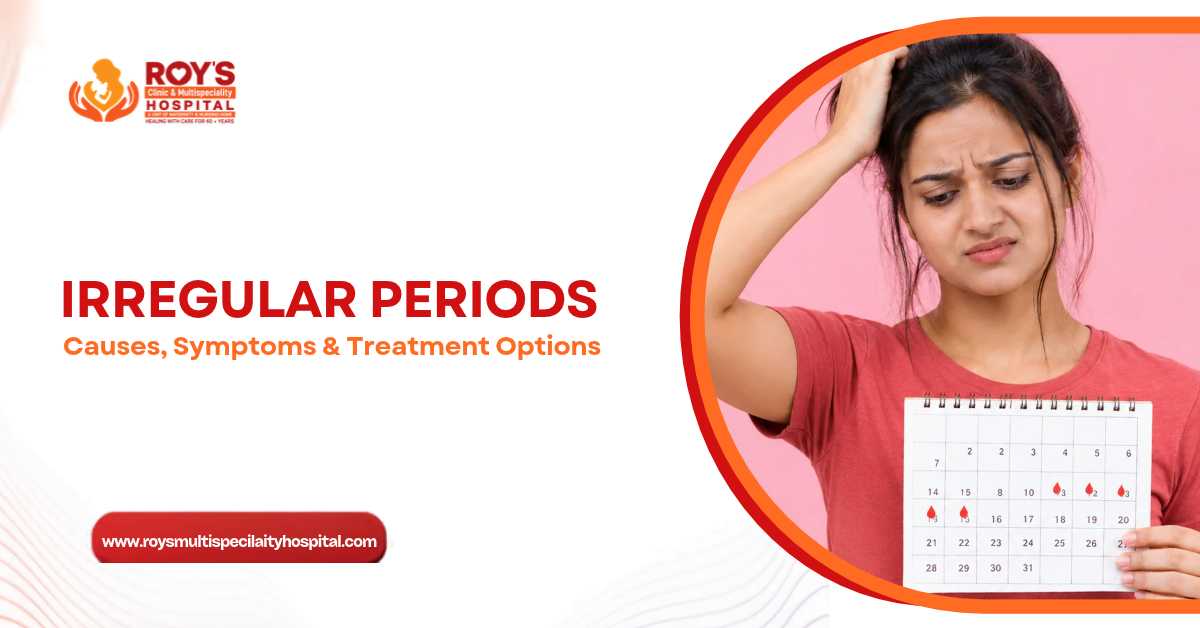


Normal periods usually occur on a 28-day cycle. However, normal menstrual cycles can range anywhere between 21 days and 35 days. If your periods occur before 21 days or after 35 days, it is considered a case of irregular periods. If you want to know everything about irregular periods, you may read this blog. It covers the causes, symptoms, and treatment options for irregular periods.
The causes and symptoms may be any, however, you must consult a gynaecologist in Siliguri or near you to seek treatment.
Causes of irregular periods
There is no single cause that can influence your menstrual cycle. Also, while some causes are temporary, others may call for medical evaluation and treatment. Below, we have given some of the most common causes of irregular periods.
-
Polycystic ovary syndrome
Irregular periods are one of the core signs of PCOS. PCOS can happen when the ovaries start producing higher than normal levels of androgens (male hormones) and may have difficulty releasing an egg regularly (ovulation).
PCOS may also trigger a vicious chain where females with PCOS may have difficulty processing insulin, which can trigger the body to make more androgens and further disrupt the menstrual cycle.
-
Thyroid disorders
There are two types of thyroid disorders – underactive (hypothyroidism) and overactive (hyperthyroidism). Both types can cause irregular periods because thyroid hormones help regulate the metabolism of the body. Thyroid hormones also interact closely with reproductive hormones like Follicle-Stimulating Hormone (FSH), LH (Luteinizing Hormone), and prolactin
Along with irregular periods, some other symptoms of thyroid disorders can be unexplained changes in your weight, fatigue, palpitations or a slow heartbeat, feeling hot or cold easily, dry skin, etc.
-
Stress and lifestyle changes
Physical and emotional stress can affect the hypothalamus, the part of the brain that regulates the hormones involved in the menstrual cycle. Acute stress may interfere with the hormonal signals that are required for ovulation, resulting in delayed or missed periods.
Other lifestyle-related factors include –
- Sudden changes in daily routines
- Inadequate sleep
- Excessive physical activity
- Significant changes in body weight
- Inadequate nutritional intake.
Symptoms of irregular periods
Different women may experience different symptoms when it comes to irregular periods. This is because the underlying cause may differ; hence, irregular periods may manifest differently. Some common symptoms may include:
- Unpredictable menstrual cycles– Your periods may occur earlier or later than expected, thus making it difficult to predict the next menstrual cycle.
- Missed periods– You might miss one or more menstrual cycles without any obvious explanation.
- Heavy menstrual bleeding – You might experience unusually heavy bleeding, thus frequently changing sanitary products or affecting daily activities.
- Very light periods– Some women may experience significantly lighter bleeding than usual.
- Prolonged menstruation– Your periods may last longer than 7 days.
- Bleeding between periods– Unexpected vaginal bleeding or spotting may occur between menstrual cycles.
- Associated physical signs– Severe cramps, passage of large blood clots, or unexpected pain.
- Hormonal or PCOS signs– Unexplained weight gain, acne, or excess facial or body hair.
- Thyroid issues– Fatigue, feeling unusually hot or cold, hair loss, or anxiety.
- Stress from lifestyle factors– Sleep problems, sudden weight loss or gain, or intense physical exercise.
Treatment options for irregular periods
Treatment of your irregular periods depends on the underlying cause, how severe the symptoms are, your age, and your reproductive goals. There is no single treatment that works for every woman. Some common treatment options are described below –
1. Hormonal medications
These may be prescribed for women who have irregular periods due to underlying hormonal conditions. These medications may include
- Combined oral contraceptive pills– These contain both estrogen and progestin. They make the cycles predictable, along with improving acne and excess hair growth.
- Progestin-only pills–Ssynthetic progestins are prescribed to trigger or regulate cycles.
- Hormonal intrauterine devices– They release levonorgestrel locally, thereby reducing heavy or irregular bleeding.
2. Treatment for PCOS
Treating PCOS may include controlling symptoms, improving metabolic health, and addressing reproductive health issues. Treatment options may include
- Lifestyle modifications: This includes focusing on anti-inflammatory foods, fiber-rich vegetables, regular exercise, etc.
- Medical Treatments– These may include combined oral contraceptive pills that lower ovarian androgen production. It may also include insulin-sensitizing agents that improve insulin resistance, lower blood sugar, and help balance hormones.
- Fertility and ovulation management– If pregnancy is desired, some oral medications that can stimulate regular egg release may be given.
3. Thyroid treatment
Treating thyroid issues depends on whether your thyroid is underactive(hypothyroidism) or overactive (hyperthyroidism).
For hypothyroidism– If you have this condition, the medication may include thyroid hormone replacement medicine.
For hyperthyroidism– Treatment aims to slow down thyroid production using anti-thyroid medications, radioactive iodine therapy, etc.
4. Lifestyle modifications
Changing your lifestyle may have a profound impact on improving your irregular periods. Changing your lifestyle may include certain aspects that are given below
- Maintaining a balanced and nutritious diet
- Getting adequate sleep
- Engaging in regular, moderate physical activity
- Managing emotional and physical stress
- Avoiding extreme dietary restrictions
- Maintaining a consistent daily routine
5. Treatment for uterine fibroids and polyps
When fibroids or polyps are the underlying cause of your irregular periods, the treatment may depend on their size, location, symptoms, and whether you have any reproductive plans.
Uterine polyps treatment
- Sometimes small polyps may resolve on their own and do not require immediate treatment.
- Short-term hormonal treatments may be prescribed.
- Removing the polyp during a hysteroscopy.
Uterine Fibroids Treatment
- Minimally invasive treatments may be provided, such as Uterine Artery Embolization or radiofrequency Ablation.
- Surgical removal of the fibroids or the entire uterus may also be resorted to.
Conclusion
Irregular periods can sometimes be temporary, caused by minor lifestyle shifts or stress. However, if they do not become regular, they might point to an underlying hormonal or other reproductive issue. Menstrual health can be affected by many factors, such as PCOS, thyroid issues, stress, major lifestyle changes, or something else.
If you think you are suffering from irregular periods, you may consult a gynaecologist in Siliguri. They may help diagnose the underlying cause and provide treatment for it.
FAQs:
What is considered an irregular period?
If your period occurs consistently in a cycle of less than 21 days or more than 35 days, it may be considered irregular periods. Additionally, enormous variations in the length of your cycle, missing your periods, and unpredictable bleeding may also indicate irregular periods.
What are the most common causes of irregular periods?
The most common causes of irregular periods may include PCOS, thyroid disorders, chronic or acute stress, significant weight changes, hormonal imbalances, excessive exercise, pregnancy, breastfeeding, and perimenopause.
Can irregular periods affect pregnancy?
Yes, irregular periods may affect your chances of getting pregnant, as they may indicate irregular or unpredictable ovulation. When ovulation does not occur regularly, it becomes difficult to identify the fertile window, thereby reducing the chances of conception in a particular cycle.
How can I make my periods regular naturally?
You can make your periods regular naturally by maintaining a balanced diet, getting proper sleep, doing physical exercise, and controlling stress. However, even after all this, if your periods do not become regular, you may consult a gynaecologist.
Are irregular periods normal during adolescence?
Your periods can be a bit unpredictable during the first few years after menstruation begins because the hormonal system is still maturing.